Content verified:
TPO Commercial Roofing Systems
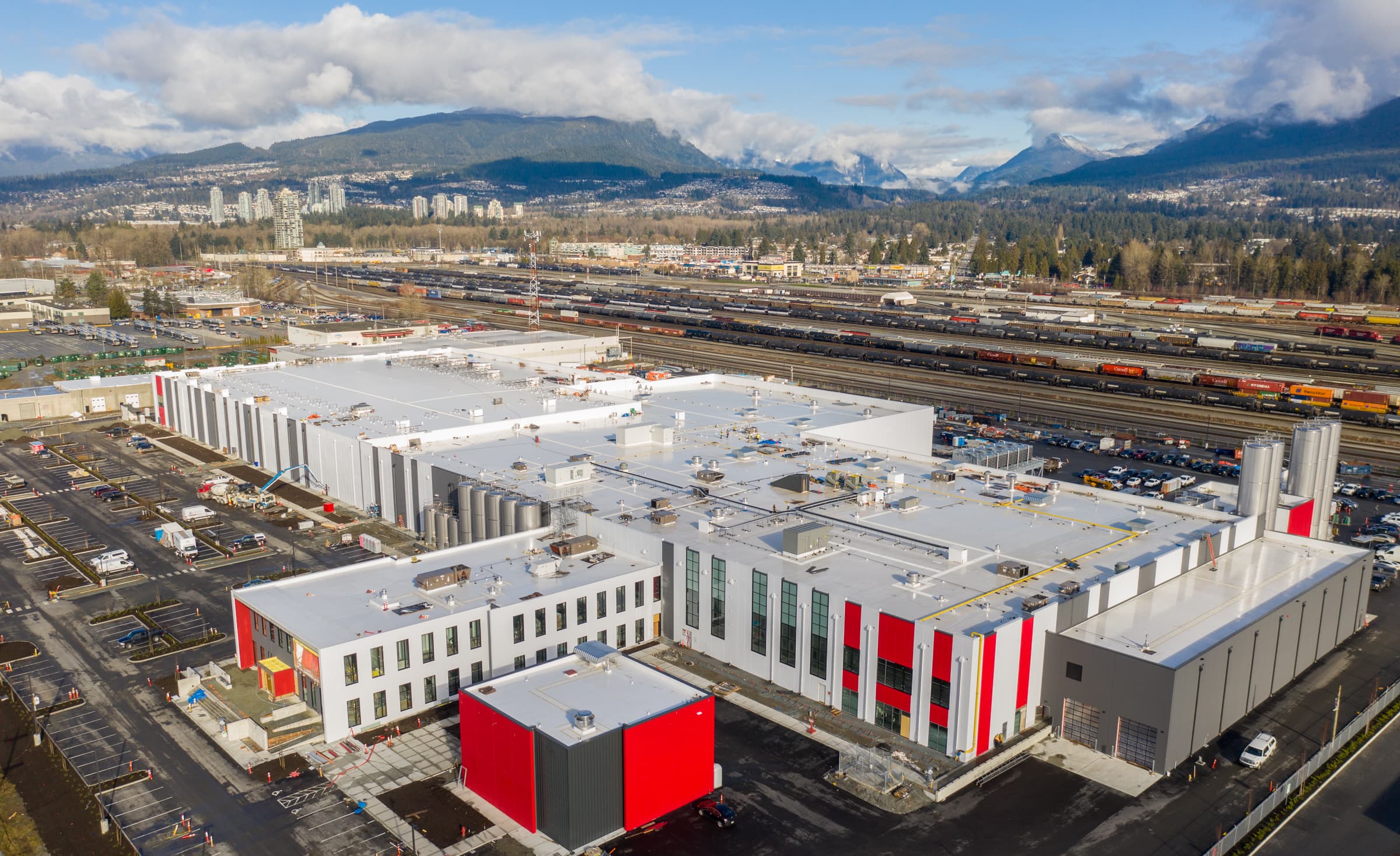
TPO roofing is a heat-welded single-ply membrane used on commercial low-slope roofs because it combines reflective energy performance, durable seams, and predictable 25 to 30-year service life for warehouses, offices, retail centres, and institutional buildings.
Raven has installed more than 8 million square feet of TPO roofing across British Columbia, with assemblies designed for warehouses, offices, retail, institutional buildings, and reroofing scopes that need reflective low-slope performance.
What Is TPO Roofing for Commercial Buildings?
TPO roofing is a single-ply thermoplastic membrane used on commercial low-slope roofs because it combines reflective performance, weldable seams, and predictable durability. It is commonly selected for buildings that want 25 to 30 years of service life with straightforward maintenance.
TPO stands for thermoplastic polyolefin. Sheets are joined with hot-air welding, which creates continuous waterproof seams instead of adhesive-bonded lap joints.
White membranes are common because they support cool-roof design, while reinforced sheets in 60 and 80 mil classes are used where traffic, puncture resistance, or longer warranty terms matter.
What Are the Advantages of TPO Roofing for Commercial Buildings?
TPO roofing is popular because it pairs reflective energy performance with heat-welded seams and a 25 to 30-year lifespan. It fits many commercial budgets, supports ENERGY STAR rated assemblies, and remains one of the most specified low-slope systems in the US market.
- White TPO membranes commonly deliver 80%+ solar reflectivity, reducing rooftop heat gain on cooling-dominant buildings.
- ENERGY STAR rated products are widely available for projects pursuing cool-roof or energy-code targets.
- Heat-welded seams form monolithic joints that can be tested and repaired without relying on liquid-applied seam adhesives.
- TPO accounts for roughly 40% of the US commercial roofing market, so it is broadly specified and supported.
How Does TPO Roofing Perform in BC Climate Zones?
TPO performs well across BC when the assembly is matched to the site. Its welded seams support wet coastal climates, reflective membranes help with hotter summer roof temperatures, and engineered details can handle snow, wind uplift, and thermal movement.
How Does TPO Perform in Coastal BC?
Heat-welded seams help resist moisture intrusion during long rain seasons, while white membranes support summer cooling on urban buildings in Metro Vancouver and the Fraser Valley.
How Does TPO Perform in Interior BC?
TPO handles thermal cycling well when attachment and flashing details are designed for movement. Reflective membranes also help buildings exposed to hotter summer roof temperatures.
How Does TPO Perform in Mountain Conditions?
TPO works in snow country when assembly design accounts for snow load, drainage, and wind uplift. UV-resistant membranes also benefit high-exposure sites at elevation.
What TPO Installation Systems Are Used on Commercial Projects?
Commercial TPO roofs are typically installed as fully adhered, mechanically attached, or ballasted systems. The right method depends on wind uplift targets, deck type, budget, structural capacity, and whether the project prioritizes premium attachment or faster installation.
Fully Adhered TPO
Membrane bonded to the substrate for premium wind uplift performance and a smooth finished assembly.
- Best for high-wind exposures
- Common on taller buildings
- Higher installed cost than mechanical systems
Mechanically Attached TPO
Fasteners secure the membrane at seams, balancing performance, speed, and cost on most commercial low-slope roofs.
- Cost-effective on large roofs
- Allows thermal movement
- Common on steel and wood deck projects
Ballasted TPO
Stone ballast holds the membrane in place where structure and project use allow a heavier assembly.
- Lowest membrane attachment cost
- Requires structural review
- Most common on large industrial footprints
What Buildings Are Best Suited for TPO Roofing?
TPO is best suited for commercial low-slope buildings that value reflectivity, broad manufacturer support, and efficient installation across large roof areas. Offices, warehouses, retail centres, and institutional buildings are common fits, especially when cooling performance matters.
- Office and retail buildings seeking reflective roofs and clean low-slope detailing
- Industrial and warehouse facilities where large roof areas benefit from broad membrane sheets
- Institutional buildings targeting ENERGY STAR rated or cool-roof assemblies
- New construction and reroofing projects where 25 to 30-year membrane life fits ownership planning
How Does TPO Compare With EPDM and PVC Roofing?
TPO usually sits between EPDM and PVC on cost while delivering reflective performance and welded seams. EPDM is often chosen for cold-weather flexibility and long-term history, while PVC is preferred when grease, chemicals, or higher fire-performance demands drive system selection.
| System | Typical Installed Cost | Expected Lifespan | Best Applications |
|---|---|---|---|
| TPO | $8-$13/sq. ft. | 25-30 years | Reflective low-slope roofs, general commercial use |
| EPDM | $7-$12/sq. ft. | 25-35 years | Cold flexibility, large roof areas, proven long life |
| PVC | $9-$15/sq. ft. | 25-30 years | Chemical exposure, grease, fire-rated assemblies |
Cost figures are planning ranges only. Actual pricing varies with insulation thickness, tear-off scope, deck repairs, edge metal, rooftop equipment, access, and warranty requirements.
How Is TPO Roofing Maintained and Repaired?
TPO roofing is maintained through annual inspections, drain cleaning, seam review, and prompt repair of punctures or flashing movement. Because seams are weldable, many repairs can be completed with compatible heat-welded patches that restore the membrane permanently.
Routine Maintenance
- Annual membrane and seam inspection
- Drainage system maintenance and testing
- Surface cleaning to preserve reflectivity
- Equipment area cleaning and inspection
- Flashing and penetration seal maintenance
Certified Installation and Quality
- Carlisle Hall of Fame contractor and 29-time ESP Program member
- GAF Chairman's Circle recognition
- Elevate Master Contractor and Inner Circle of Quality recognition
- Electronic seam testing, photo documentation, and warranty activation support
Frequently Asked Questions About TPO Roofing
How long does a TPO roof last on a commercial building?
A well-installed TPO roof typically lasts 25 to 30 years. Service life depends on membrane thickness, seam quality, traffic protection, drainage, and whether inspections catch flashing or puncture issues early.
Is TPO roofing energy efficient?
Yes. White TPO membranes commonly reflect more than 80% of solar radiation, and many qualify for ENERGY STAR ratings. That can reduce rooftop heat gain on buildings with meaningful summer cooling loads.
Can TPO be installed over an existing commercial roof?
Sometimes. A recover or overlay depends on code, moisture conditions, deck integrity, and attachment requirements. A roof inspection is needed first because some assemblies still require tear-off and substrate repair.
What maintenance does a TPO roof need?
TPO roofs need annual inspections, drain cleaning, seam checks, and prompt repair of punctures or flashing movement. The system is repairable, but neglect around rooftop equipment usually shortens performance faster than membrane aging.
Get a Commercial Roof Assessment
Your roof is protecting your building, your tenants, and your investment. Make sure it's performing the way it should.
Here's what to expect:
- Call 604-531-9619 or submit the form
- We schedule a no-obligation roof inspection at a time that works for you
- You receive a detailed condition report with prioritized recommendations and budget estimates
Email: inquiries@ravenroofing.com
Compare Other Roof Systems
Need Roofing Support?
Talk with the Raven Roofing team about your building and timeline.
Contact Raven Roofing